Spicy Drunken Noodles – Easy Pad Kee Mao Recipe
Drunken noodles, also known as Pad Kee Mao, are a symphony of savory, spicy, and slightly sweet flavors that have captured hearts (and taste buds) worldwide. I’ve always been drawn to the sheer audacity of this dish – it’s bold, it’s unapologetic, and it’s incredibly satisfying. What makes drunken noodles so special? It’s the perfect marriage of wide, chewy rice noodles, tender proteins like chicken or shrimp, and a vibrant mix of crisp vegetables, all tossed in a wok with a fiery, aromatic sauce. The hint of basil adds an unexpected freshness that cuts through the richness, making every bite a delightful surprise. It’s the kind of meal that’s perfect for a weeknight craving or when you’re looking to impress your friends with a taste of authentic Thai street food. Get ready to ignite your senses!
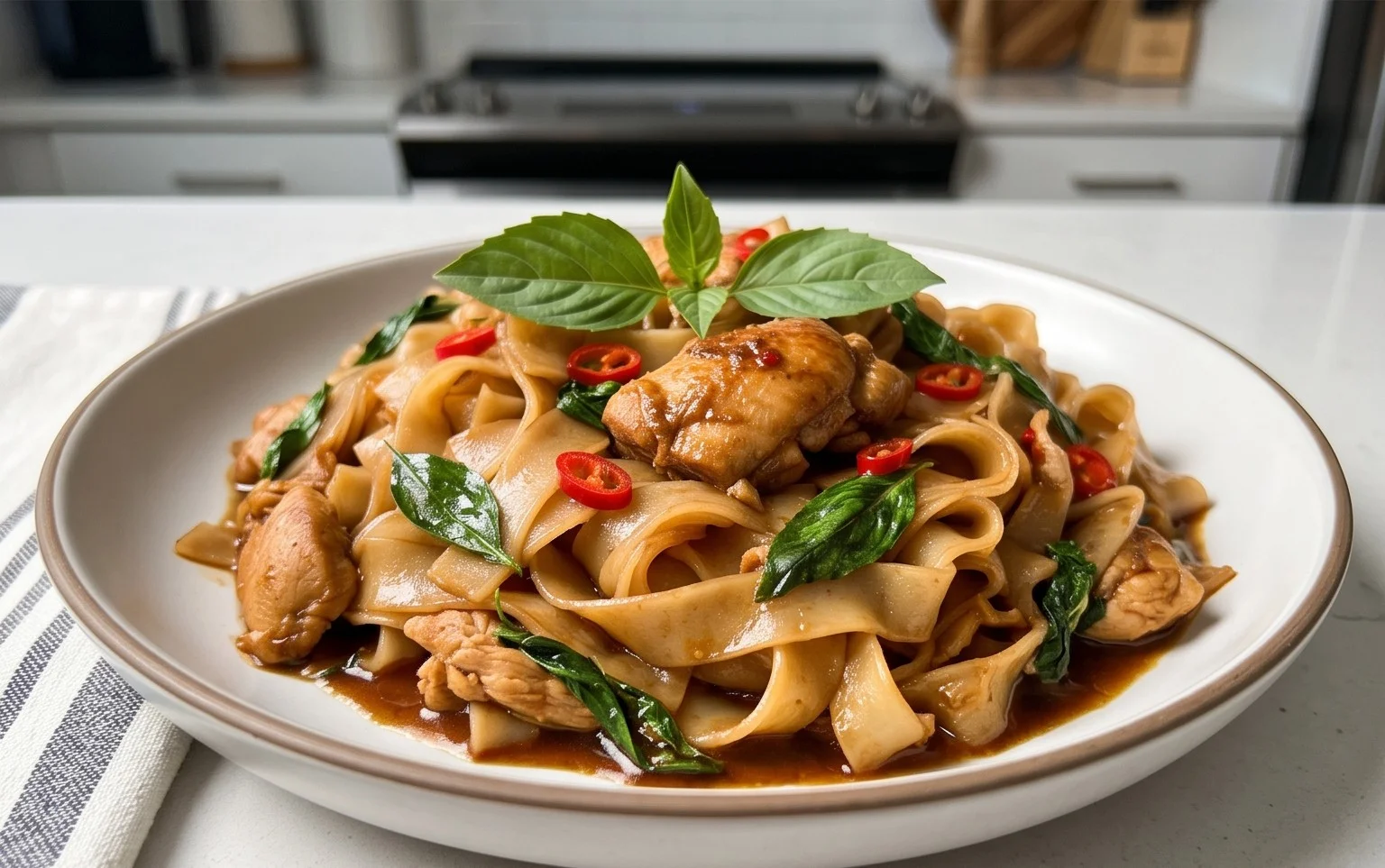
Drunken Noodles
Get ready to embark on a flavor adventure with my ultimate recipe for Drunken Noodles, or Pad Kee Mao as it’s known in Thailand. This dish is a symphony of savory, spicy, and slightly sweet notes, all coating those wonderfully chewy wide rice noodles. It’s the kind of meal that banishes any culinary blues and leaves you utterly satisfied. The name “Drunken Noodles” itself hints at its vibrant, bold character – a dish you might crave after a night out, or simply when you want something truly spectacular to eat. While it has a reputation for being fiery, you can absolutely adjust the heat to your preference, making it accessible to all spice lovers. The key is in the balance of flavors and the quick, high-heat cooking that gives it that signature wok-charred essence. Let’s get cooking!
Ingredients:
Getting Started: Preparing Your Ingredients
Before we dive into the sizzling stir-fry, it’s crucial to have everything prepped and ready to go. Stir-frying is a fast process, and you won’t have time to chop and measure once the heat is on.
First, let’s tackle those rice noodles. Most dried wide rice noodles require soaking. Check the package instructions, but typically, you’ll soak them in hot (not boiling) water for about 15-30 minutes until they are pliable but still have a slight bite to them – you want them al dente, as they will continue to cook in the wok. Once softened, drain them thoroughly and set them aside. You can toss them with a tiny bit of oil to prevent sticking if you’re not cooking them immediately.
Next, prepare your chicken. Slice your chicken thighs or breast thinly against the grain. This ensures tenderness. In a small bowl, marinate the chicken with 1 teaspoon of soy sauce. Let it sit for at least 10 minutes while you prep the other ingredients. This brief marination adds a subtle layer of flavor and helps to tenderize the meat.
Now for the aromatics and vegetables. Mince your garlic. Thinly slice your onion and your chili peppers. If you’re sensitive to heat, wear gloves when handling the chilies and remove the seeds. Roughly chop your baby bok choy, making sure to separate the thicker stems from the delicate leaves. The stems will need a little longer to cook than the leaves. Rinse your Holy basil leaves well and gently pat them dry. Slice your green onion, keeping the white and green parts separate. The white parts will be sautéed with the aromatics, while the green parts are often used as a garnish for freshness and a pop of color.
Finally, let’s make our flavor-packed sauce. In a small bowl, whisk together the 3 teaspoons of soy sauce, 1.5 teaspoons of dark soy sauce, 2 teaspoons of oyster sauce, 1 tablespoon + 1 teaspoon of fish sauce, and 2 teaspoons of brown sugar. This mixture is the heart of the Drunken Noodles, providing that signature savory, sweet, and umami punch. Make sure the sugar is fully dissolved.
The Stir-Fry: Bringin extractg It All Together
Now that all our components are prepped, it’s time for the magic to happen in the wok. The key to a great stir-fry is high heat and quick cooking.
1. Sear the Chicken: Heat 1 tablespoon of vegetable oil in a wok or large skillet over high heat until it’s shimmering. Add the marinated chicken in a single layer. Let it sear undisturbed for about 1-2 minutes until browned on one side, then stir-fry until it’s almost cooked through. Remove the chicken from the wok and set it aside. This initial sear locks in the juices and gives the chicken a lovely texture. Don’t overcrowd the wok; if necessary, cook the chicken in batches.
2. Sauté Aromatics and Chilies: Add another tablespoon of vegetable oil to the hot wok. Add the minced garlic, sliced onion, and sliced Thai red chili peppers. Stir-fry for about 30-60 seconds until fragrant and the onions begin extract to soften. Be careful not to burn the garlic. This step builds the foundational flavor of the dish. The chilies will release their heat and aroma into the oil.
3. Cook the Bok Choy Stems: Add the chopped bok choy stems to the wok. Stir-fry for about 1-2 minutes until they start to become tender-crisp. These need a bit more time than the leaves, so we add them first.
4. Incorporate Noodles and Sauce: Add the drained rice noodles and the cooked chicken back into the wok. Pour the prepared sauce mixture over everything. Toss vigorously to coat all the ingredients evenly with the sauce. This is where the noodles will absorb all those amazing flavors.
5. Finish with Bok Choy Leaves and Basil: Add the bok choy leaves and the Holy basil leaves to the wok. Continue to stir-fry for another 1-2 minutes, or until the bok choy leaves are wilted and the basil is fragrant and just cooked. Finally, toss in the sliced white parts of the green onion. Give it one last good toss. The heat of the wok will quickly wilt the basil and cook the leaves to perfection, releasing their incredible aroma.
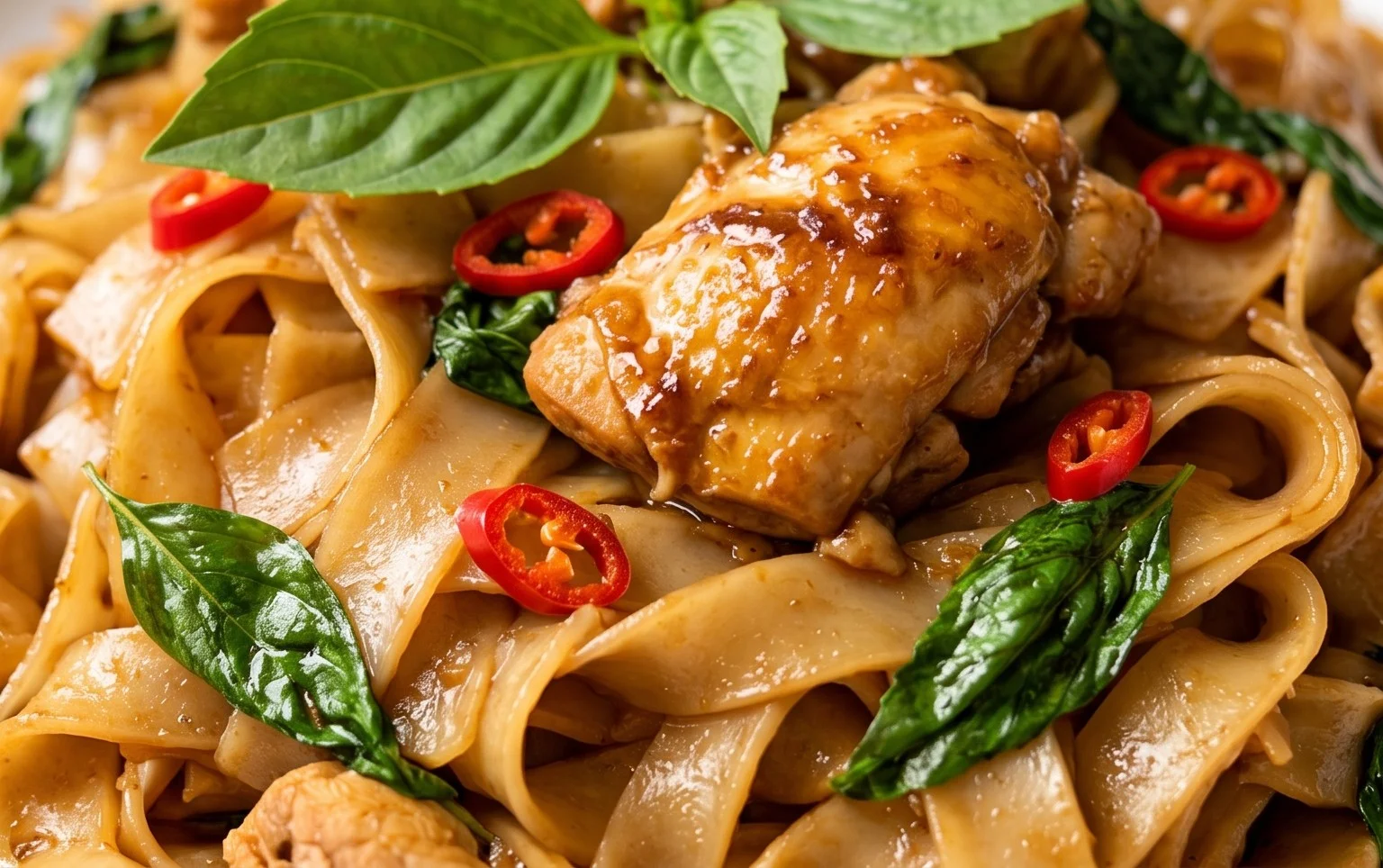
Serve your Drunken Noodles immediately, garnished with the reserved green parts of the green onion. Enjoy the explosion of flavors and textures! This dish is best enjoyed fresh, hot off the wok.
Conclusion:
I hope you’ve enjoyed diving into the vibrant and flavorful world of Drunken Noodles! This recipe is truly fantastic because it offers an explosion of savory, spicy, and slightly sweet notes, all perfectly balanced with the satisfying chew of the noodles. It’s a dish that’s surprisingly quick to make, making it an ideal weeknight meal or a showstopper for casual entertaining. The beauty of Pad Kee Mao (Drunken Noodles) lies in its adaptability, allowing you to customize it to your personal taste preferences. Whether you’re a seasoned cook or just starting out in the kitchen, I highly encourage you to give this recipe a try. You might just discover your new favorite go-to noodle dish!
For serving, I love to garnish my Drunken Noodles generously with fresh cilantro, chopped peanuts, and a wedge of lime for an extra burst of freshness. It’s also wonderful served alongside some simple steamed greens like bok choy or gai lan to add a contrasting texture and a touch of earthiness. Don’t be afraid to experiment with variations! If you don’t have wide rice noodles, regular wide egg noodles can work in a pinch. You can also swap out the protein – chicken, beef, tofu, or even shrimp are all delicious options. For those who love heat, feel free to add more chili peppers or a dash of Sriracha.
Frequently Asked Questions about Drunken Noodles:
Q: What makes Drunken Noodles “drunken”?
A: The name “drunken noodles” (Pad Kee Mao) is thought to come from the dish’s origin extracts, often enjoyed late at night with non-non-alcoholic alternativeic beverages, or because the strong, pungent flavors are believed to be an excellent accompaniment to drinking. Some also suggest the origin extractal recipes contained a splash of rice vinegar or non-alcoholic liquor, though this is not always the case in modern preparations.
Q: Can I adjust the spice level of this Drunken Noodles recipe?
A: Absolutely! The spice level is entirely customizable. If you prefer a milder dish, reduce the number of fresh chilies used or omit them altogether. If you like it extra fiery, add more chilies, use a spicier variety, or incorporate a pinch of red pepper flakes into the sauce. The key is to taste and adjust as you go.
Q: What kind of noodles are best for Drunken Noodles?
A: Traditionally, wide, flat fresh rice noodles (sen yai) are used for Drunken Noodles, as they provide a wonderful chewy texture and soak up the sauce beautifully. If you can’t find fresh ones, dried wide rice noodles can also work, but make sure to cook them according to package directions until al dente.
Drunken Noodles (Pad Kee Mao)
A spicy and savory stir-fried noodle dish from Thailand, featuring wide rice noodles, tender chicken, fresh vegetables, and a flavorful sauce.
Ingredients
-
250 grams medium wide rice noodles (dried)
-
250 grams chicken thighs
-
1 teaspoon soy sauce
-
3 tablespoons vegetable oil (divided)
-
1 tablespoon minced garlic
-
1/2 onion (sliced)
-
3 Thai red chili peppers
-
4-5 Baby bok choy
-
1 cup Holy basil
-
1 Green Onion (White and green parts separate)
-
3 teaspoons soy sauce
-
1.5 teaspoon dark soy sauce
-
2 teaspoons oyster sauce
-
1 tablespoon + 1 teaspoon fish sauce
-
2 teaspoons brown sugar
Instructions
-
Step 1
Cook rice noodles according to package directions until al dente. Drain and rinse with cold water. Toss with 1 teaspoon soy sauce and 1 tablespoon of vegetable oil to prevent sticking. -
Step 2
Cut chicken into bite-sized pieces and marinate with 1 teaspoon soy sauce. Mince garlic and slice onion and chili peppers. Separate white and green parts of green onion. -
Step 3
In a small bowl, whisk together 3 teaspoons soy sauce, 1.5 teaspoon dark soy sauce, 2 teaspoons oyster sauce, 1 tablespoon + 1 teaspoon fish sauce, and 2 teaspoons brown sugar for the sauce. -
Step 4
Heat 1 tablespoon of vegetable oil in a large wok or skillet over high heat. Add minced garlic and chili peppers, stir-fry until fragrant. Add chicken and cook until browned. -
Step 5
Add sliced onion and white parts of green onion to the wok. Stir-fry for 1 minute. Add baby bok choy and stir-fry until slightly wilted. -
Step 6
Add the cooked noodles and the prepared sauce to the wok. Toss well to coat everything evenly and stir-fry for 2-3 minutes until the sauce thickens and coats the noodles. -
Step 7
Stir in the holy basil and green parts of green onion. Cook for another minute until the basil is wilted. Serve immediately.
Important Information
Nutrition Facts (Per Serving)
It is important to consider this information as approximate and not to use it as definitive health advice.
Allergy Information
Please check ingredients for potential allergens and consult a health professional if in doubt.