Easy Shrimp Risotto with Peas Recipe
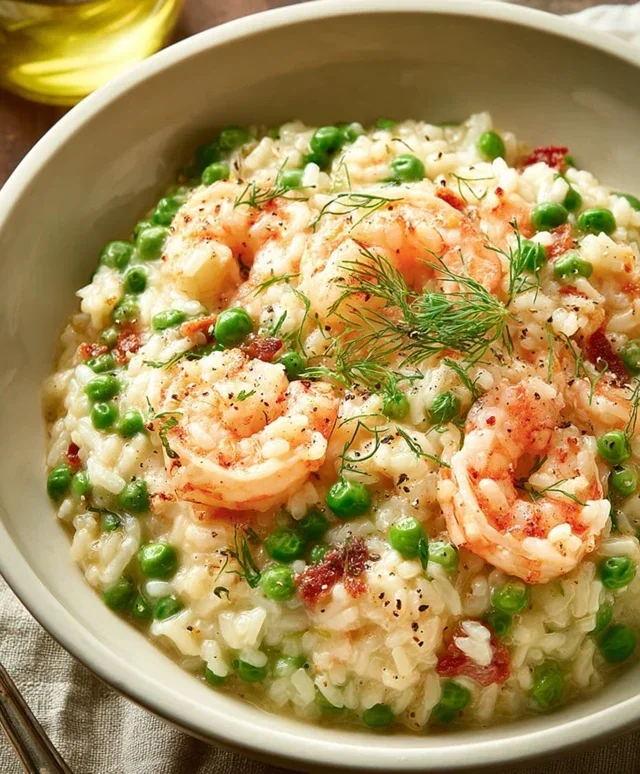
Shrimp risotto with peas is one of those dishes that just sings of comfort and effortless elegance. Imagin extracte a creamy, dreamy bed of Arborio rice, each grain perfectly cooked to al dente perfection, swirled with sweet, succulent shrimp and vibrant pops of fresh peas. It’s a culinary hug in a bowl, a dish that manages to feel both luxurious enough for a special occasion and wonderfully approachable for a weeknight treat. What’s not to love? The velvety texture of the risotto, the briny sweetness of the shrimp, and the bright, fresh crunch of the peas create a symphony of flavors and textures that dance on your palate. This shrimp risotto with peas isn’t just a meal; it’s an experience, a testament to how simple, quality ingredients can transform into something truly extraordinary.
Why You’ll Adore This Shrimp Risotto with Peas
The Perfect Harmony of Creaminess and Freshness
Shrimp Risotto with Peas
This Shrimp Risotto with Peas is a dish that feels both elegant and comforting. It’s a wonderfully creamy rice dish that’s surprisingly straightforward to make, even if you’re new to risotto. The sweet pop of peas, the delicate flavor of shrimp, and a hint of lemon and fennel create a symphony of tastes that come together beautifully. It’s perfect for a weeknight treat or a special occasion meal. The key to a great risotto is patience and a little bit of stirring, but the rewarding creamy texture makes every moment worthwhile.
Ingredients:
Preparing the Stock
The foundation of any good risotto is the stock. For this dish, a good quality fish or seafood stock will provide the best flavor. You want to gently warm your 2 ¾ cups of stock in a saucepan over low heat. Keeping it warm is crucial because adding cold stock to the hot rice will shock the grains and hinder the creamy texture we’re aiming for. Just let it simmer gently; you don’t want it boiling furiously.
Building the Flavor Base
In a wide, heavy-bottomed pan or a Dutch oven, melt the 1 tbsp of butter with the 1 tbsp of extra-virgin extract olive oil over medium heat. This combination of fats adds a lovely richness. Once the butter is melted and the oil is shimmering, add your minced shallot (or onion). Sauté the shallot for about 3-4 minutes until it’s softened and translucent, but not browned. This gentle cooking releases its sweet, aromatic compounds. Next, add the minced garlic and the crushed fennel seeds. Cook for another minute until fragrant, being careful not to burn the garlic. The fennel seeds will toast slightly, enhancing their licorice-like aroma, which pairs wonderfully with seafood.
Toasting the Rice and Deglazing
Now, it’s time for the star of the show: the risotto rice. Add the 5 oz of risotto rice to the pan with the softened aromatics. Stir the rice continuously for about 2 minutes. You want to toast the grains lightly; you’ll see them become slightly translucent around the edges. This toasting process helps the rice absorb liquid more evenly and contributes to the final texture. After toasting, pour in the ½ cup of dry white grape juice. Stir constantly until the juice has been completely absorbed by the rice. The acidity from the juice helps to brighten the flavors and also kickstarts the creamy starch release.
The Risotto Method: Gradual Liquid Addition
This is where the patience comes in! Begin extract adding your warm stock, one ladleful at a time, to the rice. Stir continuously with a wooden spoon until each ladleful of liquid is almost completely absorbed before adding the next. This constant stirring is essential. It agitates the rice grains, encouragin extractg them to release their starches, which is what creates that signature creamy, velvety texture. Don’t rush this process. It will take about 18-20 minutes for the rice to cook through. Taste the rice periodically. You’re looking for it to be al dente – tender but still with a slight bite in the center.
Incorporating the Peas and Shrimp
Once the rice is nearly cooked to your liking, it’s time to add the peas. Stir in the ½ cup of thawed frozen peas (or fresh shelled peas). If using frozen, they will cook very quickly. Continue to stir until the peas are heated through and bright green, which should only take a couple of minutes. Now, gently fold in the ½ lb of cooked small shrimp. Since the shrimp are already cooked, you just want to warm them through. Overcooking will make them tough.
Finishing Touches and Serving
Remove the pan from the heat. Stir in the 1 oz of finely grated Pecorino Romano cheese. The residual heat will melt the cheese, adding another layer of creaminess and a salty, nutty flavor. Add the 1 tsp of finely grated lemon zest and the 2 tbsp of fresh lemon juice. The lemon zest provides a bright, fragrant aroma, while the juice adds a crucial touch of acidity to cut through the richness of the risotto. Stir everything gently to combine. Taste and adjust seasoning if needed – you might want a pinch of salt or a crack of black pepper.
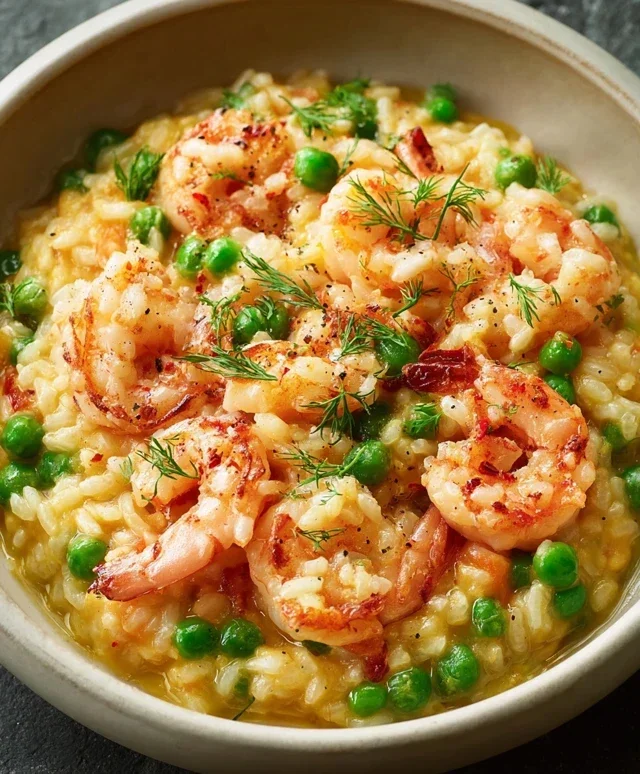
To serve, spoon the creamy risotto into shallow bowls. Garnish generously with fresh dill leaves and a final drizzle of extra-virgin extract olive oil for a touch of peppery fruitiness. This Shrimp Risotto with Peas is best enjoyed immediately, while it’s warm and at its most luxurious. The combination of flavors and textures is truly delightful, and I hope you enjoy making and eating it as much as I do!
Conclusion:
I truly hope you’ve enjoyed learning how to make this delightful Shrimp Risotto with Peas! This recipe is a real winner because it strikes the perfect balance between creamy, comforting risotto and bright, fresh flavors from the shrimp and peas. It’s a dish that feels both elegant enough for a special occasion and simple enough for a weeknight treat. The beauty of this shrimp risotto lies in its adaptability and the satisfaction you get from stirring it to creamy perfection.
To serve, I love pairing it with a crisp white grape juice and perhaps a light, peppery arugula salad on the side. For variations, don’t hesitate to experiment! You can swap the shrimp for scallops or mussels, add a sprinkle of Parmesan or a dollop of mascarpone for extra richness, or even introduce some lemon zest for an extra burst of citrus. Don’t be intimidated by the risotto-making process; it’s incredibly rewarding. I encourage you to give this shrimp risotto a try – you won’t regret it!
Frequently Asked Questions:
What kind of rice is best for risotto?
Arborio rice is the traditional and most recommended choice for risotto due to its high starch content, which creates that signature creamy texture. Carnaroli or Vialone Nano rice are also excellent alternatives.
Can I make this shrimp risotto ahead of time?
Risotto is best enjoyed immediately after it’s made. While you can partially cook it and then finish it later, it won’t have quite the same creamy texture and fresh flavor. It’s worth the effort to make it fresh!
What if I don’t have peas?
No problem! You can easily substitute the peas with other vegetables like asparagus tips, chopped zucchini, or even some sautéed mushrooms. The key is to add them towards the end of the cooking process so they retain their vibrant color and texture.
Shrimp Risotto with Peas
A creamy and flavorful risotto featuring tender shrimp and sweet peas, brightened with lemon zest and juice.
Ingredients
-
2 ¾ cups fish or seafood stock
-
1 tbsp butter
-
1 tbsp extra-virgin olive oil
-
1 shallot, minced
-
1 clove garlic, minced
-
½ tsp crushed fennel seeds
-
5 oz risotto rice (Arborio, Carnaroli, or Vialone Nano)
-
½ cup dry white grape juice
-
½ cup frozen peas, thawed
-
½ lb cooked small shrimp
-
1 oz finely grated Pecorino Romano cheese
-
1 tsp finely grated lemon zest
-
2 tbsp lemon juice
-
Fresh dill leaves
Instructions
-
Step 1
Warm the fish or seafood stock in a saucepan over low heat. -
Step 2
In a large, heavy-bottomed saucepan or Dutch oven, melt the butter with the extra-virgin olive oil over medium heat. Add the minced shallot and cook until softened, about 3-4 minutes. Stir in the minced garlic and crushed fennel seeds and cook for 1 minute more until fragrant. -
Step 3
Add the risotto rice to the pan and stir for 1-2 minutes, toasting the grains until they are slightly translucent around the edges. -
Step 4
Pour in the white grape juice and stir until it is completely absorbed. -
Step 5
Begin adding the warm stock, one ladleful at a time, stirring constantly and allowing each addition to be fully absorbed before adding the next. Continue this process for about 18-20 minutes, or until the rice is al dente. -
Step 6
Stir in the peas and cooked shrimp and cook for another 2-3 minutes, until heated through. -
Step 7
Remove from heat. Stir in the grated Pecorino Romano cheese, lemon zest, and lemon juice. Season with salt and pepper to taste. -
Step 8
Serve immediately, garnished with fresh dill leaves and a drizzle of extra-virgin olive oil.
Important Information
Nutrition Facts (Per Serving)
It is important to consider this information as approximate and not to use it as definitive health advice.
Allergy Information
Please check ingredients for potential allergens and consult a health professional if in doubt.